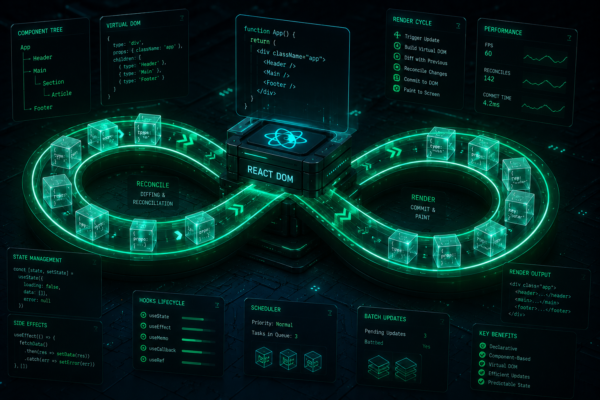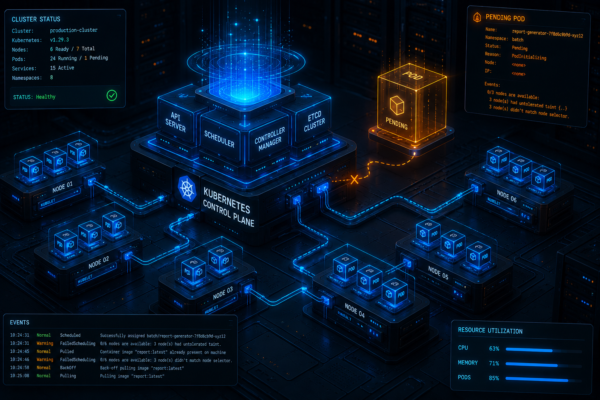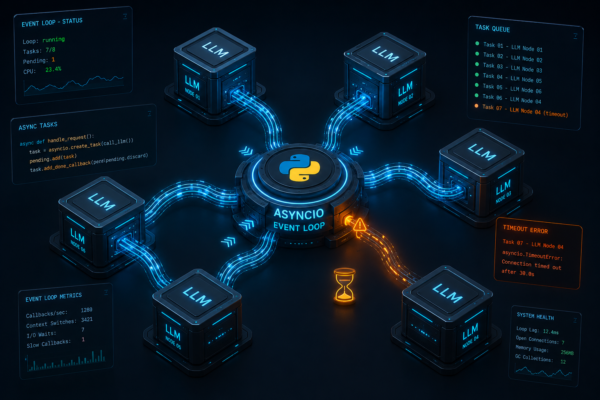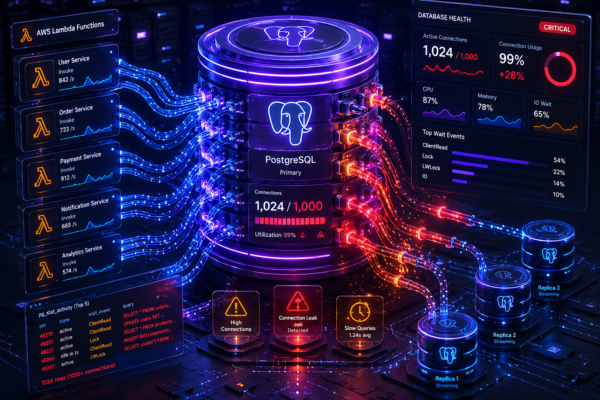






Abstract technical diagram representing PostgreSQL connection pool exhaustion and database leaks when deploying Prisma ORM in serverless functions.

Mitigating PostgreSQL Connection Pool Exhaustion in Serverless via Prisma ORM

The shift toward serverless architectures (like AWS Lambda, Vercel, and Netlify) has drastically simplified deployment pipelines and autoscaling. However, pairing a stateless, highly ephemeral serverless function with a traditional stateful relational database like PostgreSQL introduces critical infrastructure challenges. The most common and devastating failure pattern full-stack engineers encounter is database connection pool exhaustion, frequently manifested…

Read More
Next.js hydration mismatch error concept showing server rendered DOM vs client rendered DOM desynchronization code block

Fixing Next.js Hydration Errors

Next.js has revolutionized web architecture by combining the power of Server-Side Rendering (SSR) and Static Site Generation (SSG) with client-side interactivity. However, this hybrid paradigm introduces a unique class of runtime engineering errors, the most notorious being the Hydration Mismatch. If you have ever encountered the cryptic console error: “Hydration failed because the initial UI…

Read More
Conceptual visualization of an optimized Redis connection pool in Node.js backend infrastructure.

Troubleshooting Redis Connection Pool Exhaustion in Node.js Applications

### The Root Cause: Why Redis Exhaustion Happens Unlike standard relational databases (such as PostgreSQL or MySQL) that heavily rely on traditional, long-lived server-side multi-threaded connection pools, Redis operates on a single-threaded event loop architecture. Every command sent to Redis is parsed sequentially. In a Node.js framework, if your API endpoint initiates a brand-new Redis…

Read More
Docker logo container inside a digital resource boundary matrix representing how to fix Docker container OOM kills and Exit Code 137 in Python AI deployments.

How to Fix Docker Container OOM Kills (Exit Code 137) in Python AI Deployments

Deploying heavy Python generative AI applications or data science models inside Docker containers is standard cloud infrastructure practice. However, engineering teams frequently hit a critical deployment failure during runtime scaling: Docker container crashes triggered by an Out-of-Memory (OOM) event, explicitly logged as Exit Code 137. Exit Code 137 indicates that the host operating system’s kernel…

Read More
Python logo with a data table layout and a digital memory clearance indicator representing how to fix Pandas memory leaks in large dataset processing loops.

How to Fix Python Pandas Memory Leaks in Large Dataset Processing Loops

Processing massive CSV log dumps or AI training chunks inside automated Python pipelines is a standard backend operational workflow. However, developers continuously battle a stealthy infrastructure infrastructure bottleneck: gradual RAM accumulation or Python Pandas memory leaks inside execution loops. Unlike dynamic web runtimes, Python’s memory management relies heavily on reference counting. When you sequentially load…

Read More
Python logo integrated with an AI agent network chain and a digital timer representing how to fix asyncio timeout errors in LangChain pipelines.

How to Fix Python asyncio Timeout Errors in LangChain AI Agents

When deploying autonomous AI agents or multi-step LLM chains using Python, developers heavily rely on asynchronous execution to process parallel data streams. However, scaling these pipelines frequently triggers a critical runtime roadblock: asyncio.exceptions.TimeoutError during agent tool execution or vector store handshakes. This failure occurs because asynchronous Python loops enforce rigid temporal windows for network operations….

Read More
fix-cors-blocked-errors-express-featured-image

How to Fix CORS Blocked Errors in Express.js APIs Under Production Domains

Deploying a decoupled full-stack application frequently introduces one of the most frustrating security roadblocks in modern web development: Access to XMLHttpRequest at ‘API_URL’ from origin ‘FRONTEND_URL’ has been blocked by CORS policy. This runtime exception completely halts communication between your frontend user interface and your backend microservices. Cross-Origin Resource Sharing (CORS) is a strict browser-level…

Read More
Next.js Hydration Failed Error Fix

How to Fix Next.js Hydration Failed Errors in Dynamic AI Components

When rendering dynamic UI layouts or integrating AI-generated frontend blocks into modern Next.js applications, web developers frequently hit a jarring runtime brick wall: Error: Hydration failed because the initial UI does not match what was rendered on the server. This critical React mismatch breaks the client-side state, leading to broken event listeners and sudden layout…

Read More
Express.js Gateway Timeouts OpenAI Stream Fix

How to Prevent Express.js Gateway Timeouts in OpenAI Streaming Pipelines

Implementing server-sent events (SSE) to stream OpenAI responses in real-time is a fantastic way to improve user experience. However, when deploying these AI pipelines behind an Express.js backend, developers frequently hit a major production bottleneck: the 504 Gateway Timeout or internal socket hang-up error. By default, Node.js HTTP servers and middleware layers like Express enforce…

Read More
Glowing OpenAI and Node.js logos with a digital network queue indicator representing how to handle API rate limit 429 too many requests errors.

How to Handle OpenAI API Rate Limit (429 Too Many Requests) in Node.js Pipelines

When scaling generative AI features in production Node.js applications, hitting the OpenAI API Error: 429 Too Many Requests is almost inevitable. This runtime exception occurs when your application pipeline exceeds the rate limits assigned to your API tier—either tokens-per-minute (TPM) or requests-per-minute (RPM). Simply wrapping your API calls in a basic try-catch block will crash…

Read More